

ALC 2023 Panelists
Panel 1: Expanding Active Living Applications beyond Chronic Diseases to Synergistic Epidemics
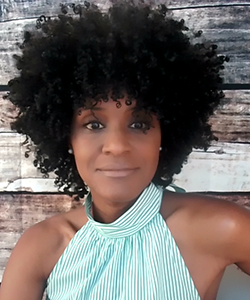
Dr. Jennifer D. Roberts
Dr. Jennifer D. Roberts is a tenured Associate Professor in the Department of Kinesiology, School of Public Health at the University of Maryland College Park (UMD). She is also the Founder and Director of the Public Health Outcomes and Effects of the Built Environment (PHOEBE) Laboratory as well as the Co-Founder of NatureRx@UMD. This initiative emphasizes the green space benefits interspersed throughout the UMD campus and acknowledges the ancestral lands of the Piscataway People along with the historical slave trade legacies of the UMD campus land. In recognition of her NatureRx@UMD accomplishments, Dr. Roberts was awarded an REI Cooperative Action Fund to create and establish the Wekesa Earth Center, a collaborative effort of scholarship and recognition across multiple disciplines to promote equity, reconciliation, and healing in nature. She now serves as the Executive Founding Director of the Wekesa Earth Center and oversees the four arms of the center: (1) research; (2) recognition; (3) programs; and (4) dissemination. The fourth arm, named Zorabelle’s Garden, is dedicated to Dr. Roberts’ late great grandmother. A native of Buffalo, New York, Dr. Roberts’ graduated from Buffalo Seminary High School and received her Bachelor of Arts (AB) degree from Brown University. She holds a Master of Public Health (MPH) degree from Emory University Rollins School of Public Health and earned her Doctor of Public Health (DrPH) degree from Johns Hopkins University Bloomberg School of Public Health.
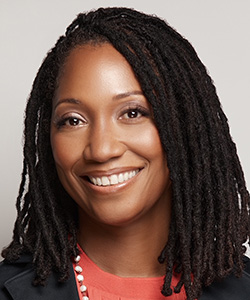
Dr. Tara B. Blackshear
Dr. Tara B. Blackshear examines the social determinants of health and physical activity and inequities in education with a focus on race, racism, and Black youth. Her interdisciplinary approach challenges the status quo and confronts structures that negatively impact the well-being of marginalized and minoritized groups. In her role as Associate Professor of Kinesiology and Program Coordinator for Physical Education Teacher Education at Towson University, Dr. Blackshear’s commitment to equity is evident in her work that appears in Quest, Physical Education & Sport Pedagogy, The Journal of Racial and Health Disparities, Taboo: The Journal of Culture and Education, The Journal of American College Health, The Journal of African American Women & Girls in Education, The Journal of Teaching in Physical Education, and Curriculum in Health and Physical Education Studies. Along with her community, civic, and institutional engagement with SHAPE America, SHAPE Maryland, Maryland State Department of Education, Delaware State Department of Education, Partnership for a Healthier America, Physical Education Health Education Canada, U.S.A. Lacrosse, PhysEquity, Lighthouse Wellness & Health Education Consulting, Baltimore City Public Schools, DC Public schools, and SOPHE, Dr. Blackshear is keen on working synergistically to address synergistic epidemics at the Active Living Conference and with the Active Living community.
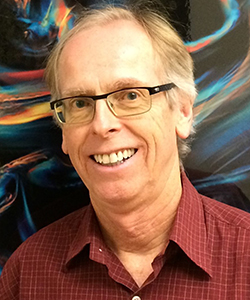
James F. Sallis, Ph.D
James F. Sallis, Ph.D is Distinguished Professor Emeritus in the Herbert Wertheim School of Public Health at University of California San Diego and Professorial Fellow at Australian Catholic University, Melbourne. He was trained in psychology and behavioral epidemiology. His current research interests are promoting physical activity and understanding policy and environmental influences on physical activity, nutrition, and obesity. He has authored over 800 scientific publications and is one of the world’s most cited authors in any field. He is currently focusing on getting research used to create healthier cities. His favorite activity of the pandemic is hiking as many trails as he can in San Diego County. www.drjimsallis.org
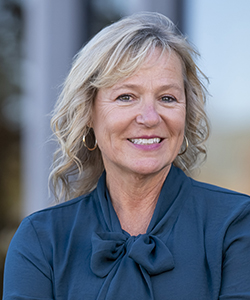
Amy A. Eyler, PhD
Amy A. Eyler, PhD is a Professor of Public Health and the Deputy Director of the Prevention Research Center at the Brown School, Washington University in St. Louis. The focus of her research is how policies and the built environment impact chronic disease prevention, mainly through behaviors such as physical activity and healthy eating. She is the author of over 100 peer-reviewed publications and three books, including one of the first textbooks on Research Methods for Public Health. In addition to her research, Dr. Eyler is an advocate for gender equity at Washington University. She is past president of the Association for Women Faculty and serves as a Leadership and Gender Equity Faculty Fellow in the office of the Vice Provost for Faculty Affairs and Diversity. She is the current Faculty Senate Council Chair and Chair of the Danforth Campus Conflict of Interest in Research Committee. Dr. Eyler has a bachelor’s degree in community health, a master’s degree in physical education from Ohio University, and a doctorate in public health from Oregon State University. She also serves on the Executive Board of Girls on the Run St. Louis and volunteers throughout her community at physical activity events. https://brownschool.wustl.edu/Faculty-and-Research/Pages/Amy-Eyler.aspx
Panel 2: Whole-of-Government Approach to Increase Physical Activity
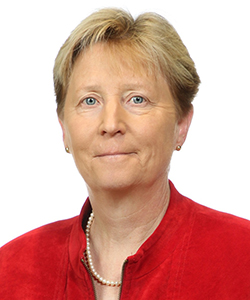
Laurie Whitsel, Ph.D
Laurie Whitsel, Ph.D. is currently the National Vice President of Policy Research for the American Heart Association (AHA), helping to translate science into policy at a national level in the areas of cardiovascular disease and stroke prevention and health promotion. The association’s policy research team provides policy development and the foundation for the American Heart Association’s advocacy work at the global, national, state, and local levels. In addition to leading the association’s policy research and translation efforts, she covers specific areas of policy development around prevention, including the tobacco endgame, health promotion, obesity, physical activity, and policy implementation and outcome evaluation.
Dr. Whitsel is the senior advisor to the Physical Activity Alliance which is the nation’s broadest coalition dedicated to promoting physical activity for health. She also serves on the board of directors for the American Council on Exercise. She has formerly served on the boards of the Health Enhancement Research Organization (HERO), and other non-profit organizations. Dr. Whitsel presents at national conferences on prevention issues and evidence-based policy making. She has served on expert advisory groups with RAND, the National Academies of Sciences, Engineering, and Medicine, the Bipartisan Policy Center, the Centers for Disease Control and Prevention, and the Robert Wood Johnson Foundation. She serves as an expert peer reviewer for several scientific journals and is a consultant on research grant teams. She gives regular guest lectures at Columbia University. Her Ph.D. is from Syracuse University and she is a Fellow and member of the AHA’s National Scientific Council on Lifestyle and Cardiometabolic Health.
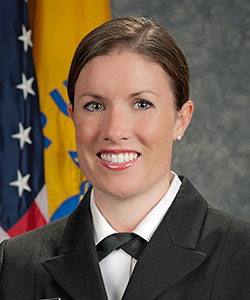
Katrina L. Piercy, PhD, RD, ACSM-CEP, FACSM
Katrina L. Piercy, PhD, RD, ACSM-CEP, FACSM is the Director for the Division of Prevention Science in the Office of Disease Prevention and Health Promotion (ODPHP) in the United States Department of Health and Human Services (HHS) and serves as a dietitian officer in the United States Public Health Service Commissioned Corps. As a Clinical Exercise Physiologist and Registered Dietitian, Dr. Piercy advises agency and departmental senior officials on current physical activity and nutrition science to inform policies and programs related to health promotion and disease prevention. Dr. Piercy and her team is trusted to lead, execute, and disseminate multi-year national public health policy initiatives on behalf of HHS, including the Dietary Guidelines for Americans, Physical Activity Guidelines for Americans, and the National Youth Sports Strategy. This work directly aligns with the pillars of the White House Strategy on Hunger, Nutrition and Health, which she helped support the development of. These national policies also inform the work of the Presidentially appointed President’s Council on Sports, Fitness & Nutrition which is managed by ODPHP. She serves as a subject matter expert for the Move Your Way® communications campaign, the first federal physical activity campaign to accompany the Physical Activity Guidelines.
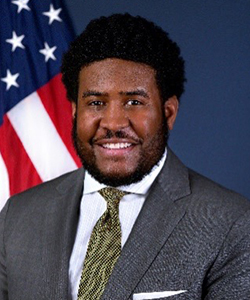
Randall (Keith) Benjamin II
Randall (Keith) Benjamin II serves as Associate Administrator for Highway Policy and External Affairs for the Federal Highway Administration (FHWA) at the U.S. Department of Transportation (U.S. DOT). He serves to advance the mission and goals of FHWA while working with all transportation stakeholders, including Members of Congress, State agencies, local communities, and other mobility users. Mr. Benjamin leads the Office of Policy and Governmental Affairs which is responsible for a variety of critical and diverse topics ranging from managing congressional affairs; housing FHWA’s traffic and transportation performance data; collaborating with the international community on new highway technology, transportation research, and program innovations; and, performing studies and analyses of national transportation policy options. As a specialist with a multi-modal transportation background, Mr. Benjamin brings experience as a transportation professional in government, labor, and advocacy.
Prior to Mr. Benjamin’s swearing in on August 30, 2021, he served as the Director of the Department of Traffic and Transportation for the city of Charleston, South Carolina where he refocused the department on equitable mobility and passed the first citywide transportation plan in history. He also represented the city on the CARTA Transit Board, Charleston Aviation Authority, and the Berkeley-Charleston-Dorchester Council of Governments.
Previously, Mr. Benjamin formed the Federal Transportation Equity Caucus as a member of the policy office under U.S. DOT Secretary Anthony Foxx and was a manager with the Safe Routes to School National Partnership. He also held increasingly senior government affairs roles with the Transport Workers Union of America, AFL-CIO representing 150,000 members across the airline, railroad, and transit sectors after serving multiple members of Congress.
Mr. Benjamin is a graduate and Deans awardee of Swarthmore College and a former fellow of both the American Council of Young Political Leaders (ACYPL) to Kenya and Ethiopia and the National Association of City Transportation Officials Leadership program. Mr. Benjamin resides in Washington, D.C. where he lives with his wife and son.
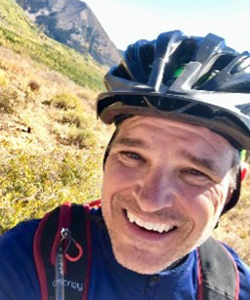
Ken Rose, MPA
Since 2021, Ken Rose has served as Chief of the Physical Activity and Health Branch in the Division of Nutrition, Physical Activity and Obesity (DNPAO) where he manages the Active People, Healthy Nation Initiative as well as CDC’s physical activity translation, evaluation, surveillance, and research. He was instrumental in creating CDC’s Active People, Healthy Nation Initiative leading a cross-disciplinary team to engage outside partners, create communications, and translate the science. Mr. Rose is also a subject matter expert in active transportation strategies and the policy interplay between transportation, land use, and physical activity. He has authored numerous policy and research publications on the these and other topics. Mr. Rose joined the physical activity branch in 2014 as a senior advisor to help research Step it Up! Surgeon Generals Call to Action to Promote Walking and Walkable Communities. He has also held a variety of leadership positions in his 25-year career at CDC including serving as the Deputy Chief of Staff and the Associate Director of Policy of the National Center for Environmental Health. Mr. Rose started his career as a Presidential Management Fellow working in youth HIV prevention.
Optional to add if you want personal PA details. Mr. Rose’s path to physical activity was non-traditional. A little over 20 years ago, he completed his first 100-mile bike event as a strategy to help him quit smoking. It introduced him to powerful health benefits of physical activity. As he integrated physical activity into his daily life as an everyday bicycle commuter, he learned how powerful built environment barriers can be and worked to weave those lessons into his career at CDC. He continues to weave cycling, mobility, and strength training into his daily physical activity regimen.